
At a Glance
Maine’s manufacturing sector spent 2025 balancing innovation and resilience. Despite global uncertainty, the state saw continued investment in advanced materials, precision manufacturing, and workforce development. Supply chain volatility, energy costs, and regulatory pressures presented challenges—but also encouraged modernization and collaboration. This year’s developments reveal how Maine manufacturers are embracing technology, growing their talent base, and expanding into new markets. Understanding these shifts can help business leaders plan for a more efficient and competitive 2026.
Contents
- Automation and Industry 4.0 Adoption
- Workforce Skills and Talent Pipeline
- Energy Costs, Regulations, and Supply Chain Pressures
- Navigating High Tariffs and Trade Uncertainty
- Looking Ahead
Maine’s manufacturing sector spent 2025 balancing innovation and resilience. Despite global uncertainty, the state saw continued investment in advanced materials, precision manufacturing, and workforce development. Supply chain volatility, energy costs, and regulatory pressures presented challenges—but also encouraged modernization and collaboration. This year’s developments reveal how Maine manufacturers are embracing technology, growing their talent base, and expanding into new markets. Understanding these shifts can help business leaders plan for a more efficient and competitive 2026.
Automation and Industry 4.0 Adoption
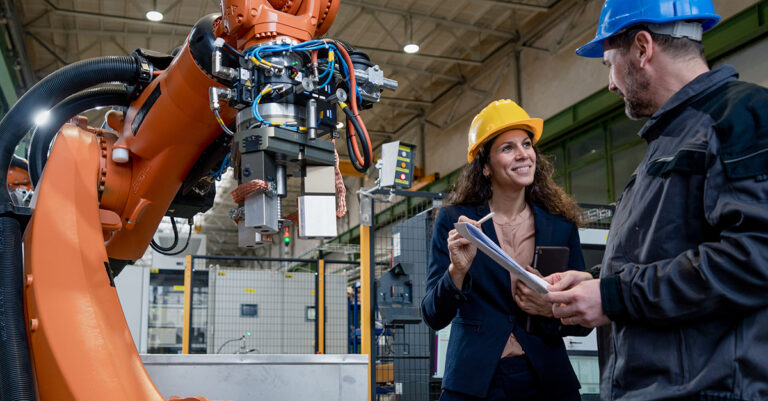
Automation and smart manufacturing continued to evolve in 2025. Many Maine manufacturers of all sizes adopted robotics, machine learning, and data-driven process monitoring to offset labor shortages and improve quality control. While initial costs remained high, many firms reported stronger productivity and lower waste after implementation. Integrating connected devices also introduced new cybersecurity risks, prompting greater investment in data protection and system resilience. Companies that approached automation strategically—aligning technology with measurable goals—saw the best returns on investment.
Key takeaway: Conduct a technology audit and create a phased plan for automation, cybersecurity, and workforce upskilling.
Workforce Skills and Talent Pipeline
The manufacturing workforce challenge deepened in 2025 as retirements accelerated and competition for skilled labor intensified. Maine’s technical schools and community colleges expanded programs in mechatronics, precision machining, and advanced composites, but demand still exceeded supply. Many employers began offering paid apprenticeships and internal training to attract and retain workers. Building a strong pipeline isn’t just about filling roles—it’s about creating a sustainable culture of learning and advancement that appeals to the next generation of makers.
Key takeaway: Invest in education partnerships and clear career pathways to strengthen long-term workforce stability.
Energy Costs, Regulations, and Supply Chain Pressures
Manufacturers continued to cite energy costs as a concern throughout 2025. Electricity and natural gas costs fluctuated and compliance with new regulatory requirements added planning and cost considerations. Meanwhile, global supply disruptions reminded businesses of the value of regional sourcing and inventory diversification. Manufacturers that implemented efficiency projects—such as equipment upgrades, renewable energy adoption, or waste reduction—found themselves better able to absorb cost swings.
Key takeaway: A proactive approach to energy management and regulatory planning can improve cost control and mitigate risk.
Navigating High Tariffs and Trade Uncertainty
Tariff pressure and trade policy uncertainty continued to influence decision-making for Maine manufacturers in 2025. While tariff levels vary by product and country, higher duties on certain raw materials, components, and finished goods have increased input costs and added complexity to global sourcing strategies. In response, many Maine manufacturers focused on supplier diversification, renegotiated contracts, and increased regional sourcing, particularly within the U.S. and Canada.
Some companies passed limited cost increases through pricing, while others offset tariff impacts through productivity improvements, product redesign, or margin management. National reshoring and nearshoring trends also created new opportunities for Maine-based suppliers as customers looked for more predictable supply chains and reduced exposure to overseas trade risks.
Key takeaway: Manufacturers that actively evaluate tariff exposure—by product line and supplier—are better positioned to protect margins and maintain customer relationships in a volatile trade environment.
Looking Ahead
If 2025 proved anything for Maine manufacturers, it’s that adaptability and innovation go hand in hand. The sector’s commitment to modernization, training, and sustainable growth is paying off, even amid volatility. By embracing new technology, investing in people, and managing risk proactively, manufacturers are not only weathering today’s challenges—they’re shaping Maine’s industrial future. Despite the challenges, one message carries through every industry: progress favors preparation, and the most resilient businesses are those already building tomorrow’s advantages today.

Holly Ferguson is a principal at ARB and the Practice Leader of the firm’s Accounting & Attest, Manufacturing, and Credit Union Services Teams. She provides industry-specific services for manufacturers, distributors, credit unions, businesses, and nonprofit organizations. Throughout her career, Holly has provided manufacturers with financial reporting consulting services, assisted with transactional accounting and consulting related to business acquisitions/sales, and analyzed implications and strategic implementation of new accounting standards. She is the former Treasurer on the Board of Directors and Finance Committee of the Manufacturers Association of Maine.